
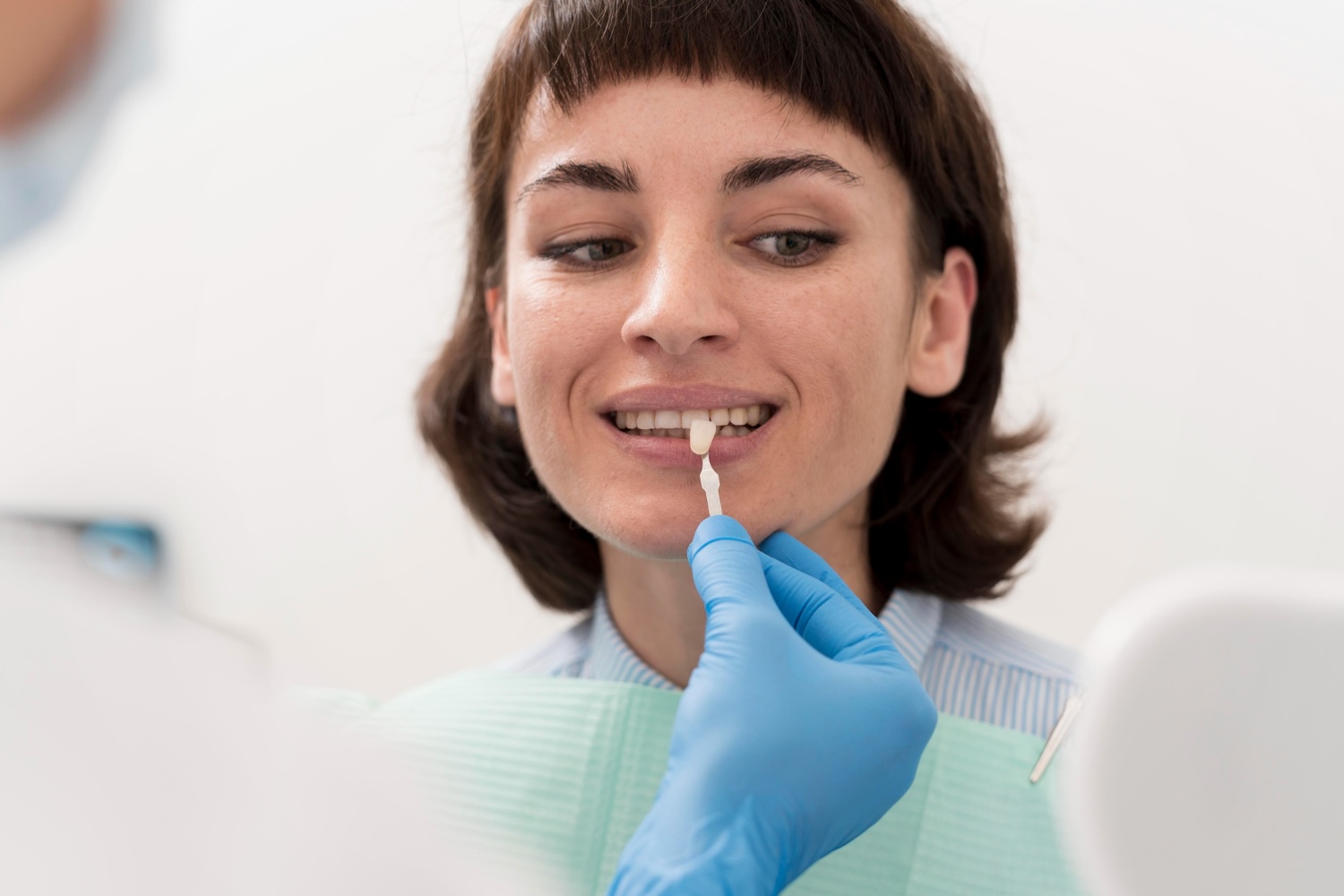
A smile upgrade is not only about vanity. It can change how you show up at work events, family gatherings, and in photos that last for years. As the Bay Area gets cooler and days feel a little shorter, many people start thinking about finishing personal projects before the year ends. A custom smile design often sits high on that list.
We see fall as a smart time to plan a smile makeover. There is usually enough time for careful digital planning, try-ins, and any small adjustments before holiday parties and the new year. With high-end smile design, we are not just placing veneers; we are designing how your teeth, lips, and face work together so your smile looks natural from every angle.
In our office, no-prep and minimal-prep veneers are two of the tools we use to reach that result. They are both porcelain veneers, but they are not the same thing and they are not right for every mouth. Our goal here is to explain who truly qualifies for each, when they can fail, and how an expert dentist in the Bay Area makes that choice.
No-prep veneers are ultra-thin porcelain shells that bond right to the enamel with little or no drilling. Think of them as a very fine layer of porcelain that adds volume to what is already there. They tend to work best for teeth that are slightly small, a bit worn, or set back, where adding material will bring the teeth into a better position.
People who may be a good fit for no prep veneers in the Bay Area often have:
It is also important to clear up what no-prep veneers are not. They are not clip-on veneers that you pop in and out. They are permanent porcelain bonded to your teeth. They are not the same as a temporary “trial smile” you can remove. And they are not always the most conservative choice if they make teeth look bulky or out of balance with your lips and face.
Common myths around no-prep veneers include:
So when we talk about no-prep, we are talking about a specific situation where extra space and strong enamel already exist. When those pieces line up, no-prep veneers can be a beautiful, conservative option.
Minimal-prep veneers involve very light reshaping of the enamel, usually less than the thickness of a fingernail. The goal is to create just enough room so the porcelain can sit in the right place without feeling thick or looking “stuck on.” The tooth remains mostly intact, but we gain control over shape, alignment, and bite.
Minimal-prep veneers are often the better choice when:
In these cases, removing a tiny amount of enamel can actually protect long-term health. It lets us:
Trying to force a no-prep approach when the teeth are not suited for it can cause problems. The gums may get irritated, the smile can look heavy, and the veneers may not last as long as they should. A small amount of thoughtful preparation is often the more conservative choice when we look at the whole picture over many years.
With high-end smile design, the decision between no-prep and minimal-prep veneers does not come from a quick glance. It starts with detailed records so we can fully understand your teeth, gums, and bite before making any permanent changes.
Our process usually includes:
We use digital smile design software to plan tooth shape, size, and position in harmony with your lips and facial features. From there, we can create a 3D-printed model and temporary “test drive” version of your future smile that you wear on your teeth for a short time. This test phase helps us see in real life whether a no-prep, minimal-prep, or blended plan gives the most natural look and comfortable bite.
During planning, we pay close attention to:
Trends on social media may make “prepless” veneers sound like the gold standard for everyone. In reality, expert treatment is about matching the method to your unique teeth and face, not forcing a trend.
Veneers usually fail when planning is rushed or when the wrong type of veneer is chosen for the wrong teeth. One common problem is over-bulky no-prep veneers that trap plaque and make flossing hard. This can lead to gum irritation and dark lines over time.
Other reasons veneers fail include:
Low-fee, high-volume veneer offers sometimes skip important steps like digital design, bite analysis, or test-drive temporaries. Without that planning, even nice porcelain can end up in the wrong position.
A reconstructive mindset looks further ahead. We focus on:
This kind of approach lowers the risk of regret and re-do work later on. It also helps your new smile stay stable and natural-looking, not just right after placement but many years down the line.
If you are thinking about being photo-ready for end-of-year events, starting the process in fall gives time for planning, mock-ups, and any fine-tuning. That way your final veneers are in place and feeling comfortable before things get busy.
At Dr. Lior Tamir’s practice, we see no-prep veneers, minimal-prep veneers, and blended approaches as tools inside a larger high-end smile design process. Our aim is not to sell a certain type of veneer; it is to co-create a long-lasting, natural smile that fits your teeth, your face, and your lifestyle while being as gentle as possible to your natural tooth structure.
If you are curious whether your teeth are a good fit for no prep veneers in the Bay Area, we invite you to schedule a personalized consultation with Dr. Lior Tamir. We will walk you through your options, answer your questions, and design a plan that fits your goals and lifestyle. Reach out today or contact us to reserve your appointment and take the next step toward a confident, natural-looking smile.
