
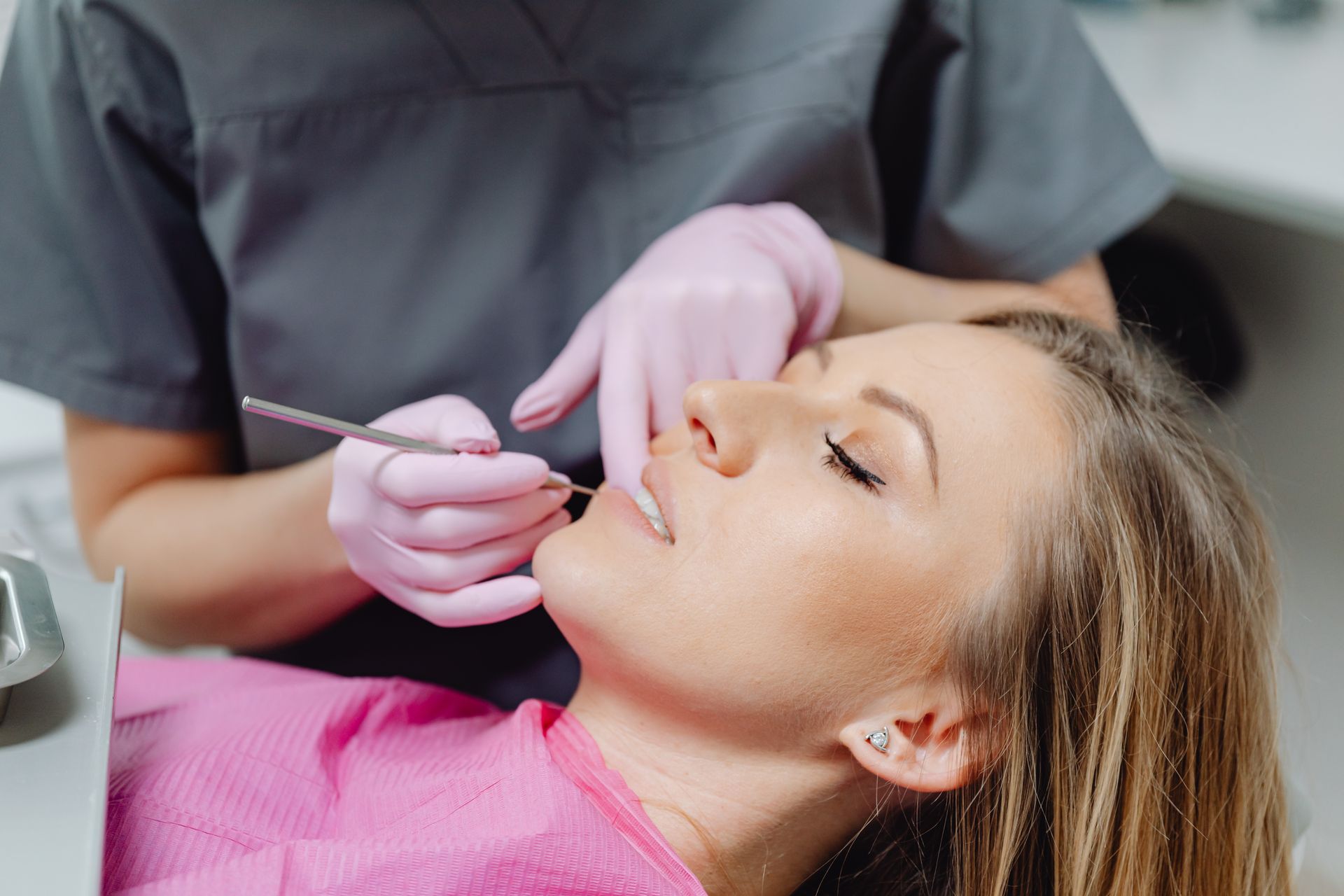
Worn, chipped, or uneven front teeth can make a smile look shorter, older, or less polished. Edge wear may come from normal aging, grinding, clenching, bite pressure, acid erosion, or older dental work.
Both composite bonding and porcelain veneers can rebuild worn edges beautifully. The better choice depends on your enamel, bite, smile goals, daily habits, and how long you want your result to last.
A worn edge is not always only a cosmetic concern. Teeth can become flatter and shorter when they meet with repeated force over time. Clenching, grinding, an uneven bite, acidic exposure, and aging restorations may all play a role.
Before changing the appearance of your teeth, we look closely at why the wear happened. If pressure from grinding or bite imbalance is left unaddressed, new bonding or porcelain may be more likely to chip or wear. Our evaluation considers the condition of your enamel, existing dental work, gum health, bite relationship, and the amount of healthy tooth structure available.
High-end smile design also goes beyond making teeth look whiter or longer. We consider facial balance, tooth proportions, translucency, lip movement, and how your smile appears in natural light. Sometimes a small amount of bonding is enough. Other times, a coordinated veneer design creates a more balanced result across the visible smile.
Composite bonding uses tooth-colored resin to rebuild chipped corners, smooth uneven edges, close small spaces, or add subtle length. In many cases, we can complete bonding with little to no removal of natural tooth structure, making it a conservative choice for smaller changes.
Bonding may be a good fit when you have minor wear or an isolated concern rather than a need for a full smile redesign. It can also be a practical first step for someone who wants to see how added length or a new edge shape feels before considering a broader treatment plan.
Bonding can help with:
Composite resin does have limits. It may stain, lose some surface shine, or wear sooner than porcelain, especially when strong bite pressure or grinding is involved. Repairs and touch-ups are often possible, but bonding may need more maintenance over time.
Custom porcelain veneers are thin restorations that cover the front and edge of a tooth. They can rebuild worn edges while refining shape, shade, symmetry, and the overall flow of your smile. Porcelain is valued for its lifelike translucency, stain resistance, and polished surface.
For more extensive wear, veneers can create consistency when several front teeth vary in length, color, or contour. A well-planned case can restore more youthful proportions without making the teeth look overly large or artificial. The goal is a smile that suits your features and still looks like you.
When considering porcelain veneers in San Jose, it is important to understand that no-prep and minimal-prep veneers are not automatic choices for every smile. If tooth position, enamel, and your goals allow, these advanced options may preserve more natural structure. In other cases, a small amount of conservative preparation helps prevent a bulky appearance and allows the veneers to fit naturally.
Bonding and porcelain veneers differ in how they are planned and maintained. Bonding can often be completed in fewer visits, while veneers involve detailed smile planning, custom fabrication, and careful placement. Depending on the case, veneer treatment may include shade selection, temporary restorations, and a review of how the final smile looks and functions.
Here are a few practical differences to discuss with us:
Neither material is indestructible. Brushing, flossing, professional cleanings, and avoiding habits such as biting hard objects or using teeth as tools all matter. If you clench or grind, we may recommend a custom night guard to help protect both your natural teeth and cosmetic restorations.
The most attractive cosmetic result starts with a healthy, stable foundation. Before bonding or porcelain veneers in San Jose, we may need to address missing teeth, failing restorations, gum inflammation, or bite concerns that could affect the long-term outcome.
Some smiles need more than edge repair. Dental implants can replace missing teeth and support a more complete smile. For extensive tooth loss, All-on-X treatment may provide a stable full-arch solution before final cosmetic details are considered. We can also coordinate wisdom tooth removal and other surgical care through our oral surgeon.
For patients who feel anxious about dental treatment or need more involved care, sedation-supported care may be considered. Thoughtful planning allows us to consider your comfort, function, and appearance together rather than treating each concern separately.
The right treatment for worn edges is the one that respects your tooth structure, supports your bite, and fits the changes you want to see. Bonding may be ideal for subtle, flexible repairs, while porcelain veneers may be better for a more complete and lasting smile refinement.
A personalized smile design consultation helps us evaluate the condition of your teeth and discuss which approach makes sense for your goals. With the right plan, worn edges can often be restored in a way that looks natural, feels comfortable, and supports your long-term oral health.
Review our porcelain veneers in San Jose results to see how customized treatment can enhance shape, balance, and overall smile aesthetics. At Dr. Lior Tamir, we create high-end smile designs with careful attention to the details that make each result feel like your own. When you are ready to discuss your options, contact us to arrange your visit.
