
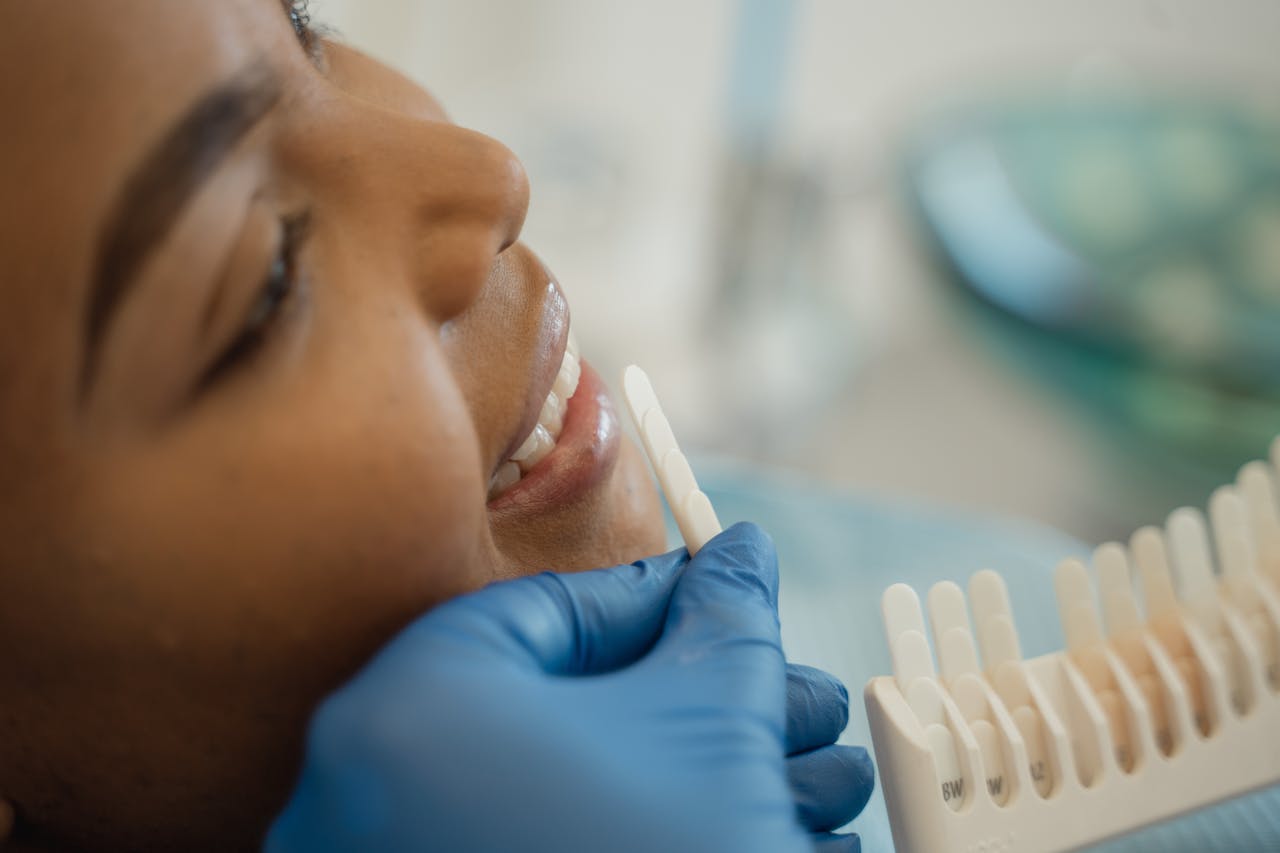
Your smile is no longer just for the conference room. It shows up on Zoom calls, investor pitches, team standups, podcasts, panel recordings, and every phone that gets pulled out for a quick photo. That means small details that used to be invisible now show up in 4K and under harsh lighting.
Porcelain veneers in Silicon Valley have evolved to keep up with this reality. Micro-prep and no-prep veneers are ultra-thin, highly detailed restorations made to look natural from any angle, on camera and off. Our focus is on preserving as many healthy teeth as we can, while designing smiles that look believable, not “done.”
At our Bay Area practice, we blend digital planning with carefully hand-finished details. The goal is not just straighter, whiter teeth, but a smile that moves, reflects light, and functions like natural enamel while you talk, present, and laugh all day long.
Traditional veneers often require more tooth removal to make room for thicker porcelain. Micro-prep and no-prep veneers are different. They are ultra-thin porcelain shells that fit over your front teeth with very little or sometimes no enamel reduction at all.
Ideal candidates often have:
If teeth are severely rotated, crowded, or covered in large fillings or crowns, true no-prep veneers may not be the best choice. In many cases, a micro-prep approach works better than pushing for “no-prep at all costs.” Light, precise shaping allows the veneers to sit flush with your natural teeth instead of looking bulky or like square “chiclets.”
This conservative approach offers several benefits:
For many Silicon Valley professionals, that philosophy fits how they make decisions in other areas of life: smart upgrades, less risk, less waste, and long-term flexibility.
When people think about veneers, they often picture color first. But the edges of your front teeth, called the incisal edges, play a huge role in how your smile looks on camera. Sharp, flat, perfectly straight edges can read as harsh or fake, especially in bright lighting or HD video.
Natural teeth rarely have ruler-straight edges. They have gentle waves, tiny irregularities, and slight transparency near the tips. When we plan micro-prep or no-prep veneers, we pay close attention to how those edges will:
With digital smile design, we can:
Function matters as much as appearance. Poorly designed edges can:
For people who spend hours each day talking on calls, leading meetings, or recording content, that balance of form and function is especially important. We want your veneers to look natural on a ring light, but also feel invisible in your mouth.
The most natural veneers are not perfectly smooth or one-note in color. Under studio lights or bright daylight, flat, overly polished veneers can shine too much and reveal themselves quickly.
Real enamel has:
We can build these small details into the porcelain surface. When light hits these micro-textures, it scatters in a more natural way, breaking up reflections and preventing that “plastic” look.
Translucency is another big factor. A beautiful veneer usually is not a single opaque shade. Instead, it lets some light pass through, then bounce off the underlying tooth, just like natural enamel over dentin. With modern porcelain layering, we can:
This matters even more in a world of 4K cameras, HDR settings, and bright LED panels. Over-whitened, uniform veneers can look flat and unnatural when the exposure is high. Thoughtful texture, layered translucency, and realistic color variation help your veneers “fool” the camera, even in unforgiving lighting.
Our approach to porcelain veneers in Silicon Valley lines up naturally with the tech-forward feel of the area. We use digital tools not as a gimmick, but as a way to plan more precisely and communicate clearly.
A typical smile design process often includes:
From there, we often create a physical mockup or temporary veneers so you can “test drive” your future smile. This is where you can:
Once we refine the design together, the final micro-prep or no-prep porcelain veneers are crafted and bonded with a focus on precision. Spring and early summer can be a popular time to start, since many people are preparing for conferences, product launches, weddings, and graduations where cameras will be everywhere.
Not everyone needs or benefits from the same type of veneer. Micro-prep and no-prep options can be great if you:
It is also important to have realistic expectations. Some cases simply need slight shaping to avoid bulky results or to blend smoothly with neighboring teeth. The goal is not to force a trend, but to choose the level of prep that makes sense for your mouth, bite, and long-term health.
Lifestyle plays a role too. During planning, we will talk about:
Those details guide decisions about porcelain type, protective night guards, and maintenance plans. Done thoughtfully, micro-prep and no-prep veneers can become a quiet, reliable part of your daily life, supporting your confidence every time a camera turns on.
If you have been thinking about enhancing your smile, we invite you to schedule a consultation to explore how porcelain veneers in Silicon Valley can work for you. At Dr. Lior Tamir, we take time to understand your goals, explain your options, and design a treatment plan tailored to your needs. Reach out today to ask questions, discuss next steps, or book your visit through our contact us page.
